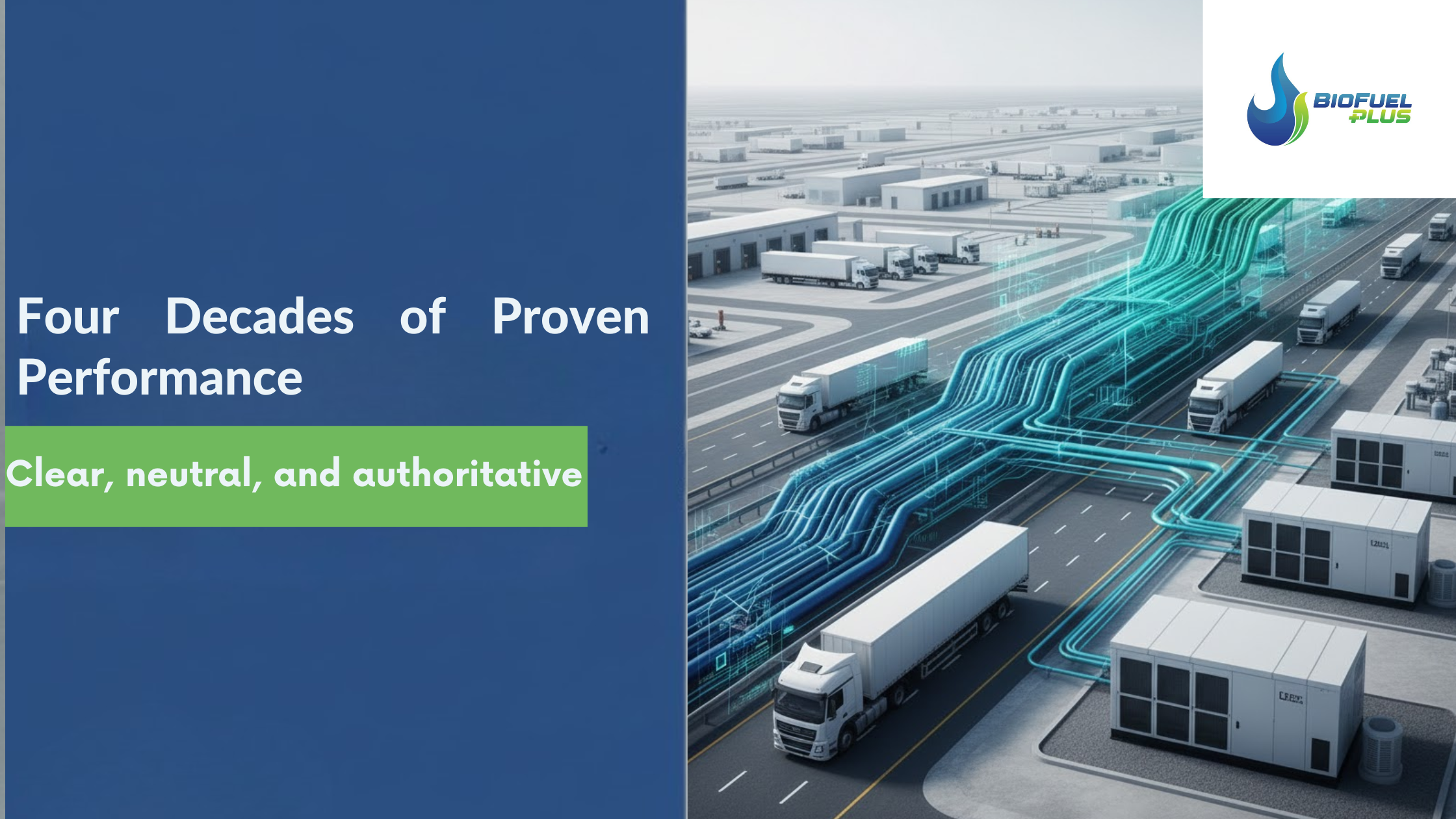
Bio diesel is not new technology. It is proven fuel
In discussions around energy transition, biodiesel is sometimes grouped with emerging or experimental solutions. In reality, biodiesel has been used commercially for more than four decades, powering fleets, generators, marine vessels, and industrial equipment across Europe, North America, and Asia.
For UAE fleet owners and power generation operators, this history matters. It shows that biodiesel is not an untested concept, but a mature, standards-based fuel that has evolved alongside diesel not in opposition to it.
A brief look at 40 years of real-world use
Biodiesel has been part of the global fuel mix since the early 1980s, with early adoption driven by energy security and agricultural economies. Over time, its role expanded as quality standards improved and blending practices became more controlled.
Key milestones include
● Widespread adoption of low blends such as B5 and B7 in Europe
● Long-term fleet and municipal use in countries like Germany and France
● Industrial and generator applications in United States and Malaysia
● Development of strict quality standards such as EN14214 for biodiesel and EN590 for diesel
This evolution transformed biodiesel from a niche fuel into a regulated, predictable, and operationally reliable energy source.
What makes biodiesel a mature fuel today
Maturity in fuel terms means consistency, standards, and predictable behaviour. Modern biodiesel meets all three.
Today’s biodiesel is
Produced to defined specifications
Tested for stability and cleanliness
Designed for blending with EN590 diesel
Supported by decades of engine and field data
For operators, this translates into confidence. Biodiesel blends are not experimental trials.
They are repeatable, documented fuel solutions already embedded in global diesel supply chains.
Why biodiesel works particularly well for fleets and generators
Fleets and generators share common requirements. They need reliability, fuel availability, and compatibility with existing infrastructure. Biodiesel meets these needs when supplied correctly.
For fleets
Low blends such as B5 or B7 integrate seamlessly into existing refuelling operations Fuel behaviour remains consistent across duty cycles No change to logistics or scheduling is required
For generators
Stable combustion characteristics support continuous runtime Good lubricity benefits fuel system components Compatibility with stored diesel makes biodiesel suitable for standby and prime power
This is why biodiesel has been used in hospitals, data centres, logistics depots, construction sites, and ports worldwide for decades.
The UAE perspective: diesel remains essential
In the UAE, diesel continues to underpin economic activity. It powers transport corridors, industrial zones, remote sites, and critical infrastructure. Any viable sustainability pathway must work with diesel, not against it.
Biodiesel’s long track record makes it uniquely suited to this role. Rather than replacing diesel, it complements and enhances it, supporting emissions reduction while preserving operational reliability.
This is exactly how premium biodiesel is positioned by Biofuel Plus.
How Biofuel Plus builds on 40 years of experience
Biofuel Plus does not treat biodiesel as a commodity blend. It treats it as a finished fuel system, informed by decades of global performance data.
Across its portfolio
● BFP Premium B5, B7, and B20 are finished fuels produced using EN590 diesel and EN14214-compliant biodiesel, enhanced with a proprietary bio-energy compound for stability and performance confidence
● BFP Premium Bio EN590 provides a premium diesel foundation aligned with the same quality discipline
● Biofuel Plus B100 is supplied as a high-quality bio-energy compound used in controlled applications to optimise combustion behaviour and lubricity
This approach reflects a core lesson from 40 years of biodiesel use. Quality and consistency
determine success, not headline blend percentages.
Biodiesel and Net Zero readiness are already connected
Because biodiesel is mature, it plays a practical role in Net Zero strategies today. It allows
organisations to
Reduce lifecycle emissions impact
Improve sustainability reporting
Maintain existing engines and assets
Avoid disruption to operations
For UAE fleets and generator operators, this makes biodiesel one of the lowest-risk sustainability actions available. It is deployable now, measurable now, and compatible with future energy pathways.
What decision-makers should remember
When evaluating biodiesel, experience matters. Four decades of global use show that
Biodiesel performs reliably when standards are followed
Low and mid-level blends suit most industrial applications
Finished fuels are more dependable than ad-hoc blending
Supplier quality discipline is critical
This is not a future technology story. It is a proven fuel story.
Final thoughts
Biodiesel has earned its place in the global energy mix through 40 years of consistent, real-world performance. For UAE fleets and generators, this history translates into confidence, reliability, and practical sustainability progress.
When supplied as a premium, EN-compliant finished fuel and enhanced with advanced bio-energy compounds, biodiesel becomes more than an alternative. It becomes a trusted extension of diesel, supporting both operational excellence and Net Zero readiness.
The future of fuel in the UAE is not about radical replacement. It is about using proven solutions better and biodiesel is one of the most proven tools available.